
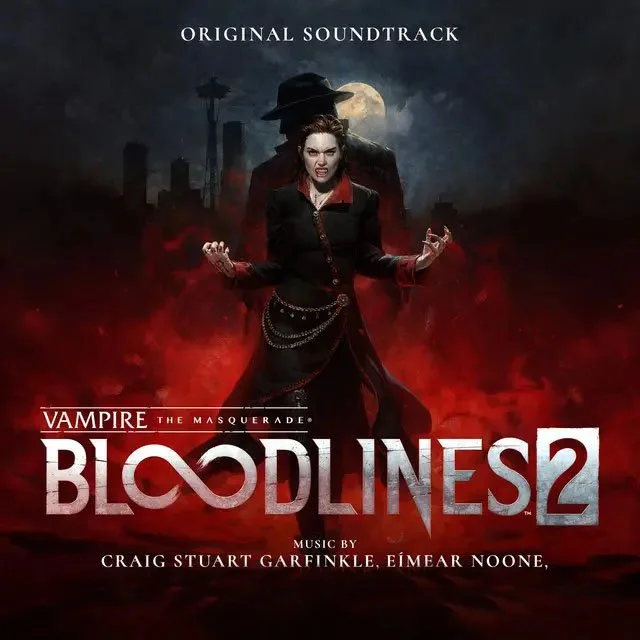
Vampire: The Masquerade
Bloodlines 2
The soundtrack for Vampire: The Masquerade – Bloodlines 2 is one of the strongest parts of the game — and in many ways, it succeeds where parts of the gameplay and RPG systems reportedly struggle. While reviews of the game itself were deeply divided, the music consistently stands out for capturing the seductive, haunted atmosphere that defines the World of Darkness universe.
What makes the OST especially interesting is the collaboration between returning original Bloodlines composer Rik Schaffer and composers Craig Stuart Garfinkle and Eímear Noone. Schaffer’s music was central to the cult identity of the 2004 original, and Bloodlines 2 wisely preserves that DNA rather than replacing it outright.
The score leans heavily into noir textures, ambient dread, and sensual melancholy. Instead of going for generic “epic game music,” the composers create a sound world built from distorted cellos, processed guitars, industrial percussion, whispered vocals, jazz harmony, and slow-burning atmospheric tension. According to development notes, inspirations ranged from Only Lovers Left Alive to Under the Skin, Gregorian chant, and noir cinema.
The result is music that feels ancient and modern at the same time — exactly what vampire fiction needs.
One of the OST’s greatest strengths is restraint. Many tracks avoid huge orchestral crescendos in favor of simmering unease. Quiet ambient passages often feel more threatening than the combat cues. Seattle’s rain-soaked alleys, abandoned interiors, and vampire court politics are elevated by music that constantly whispers rather than screams.
Eímear Noone and Craig Stuart Garfinkle’s additions bring a more cinematic and emotionally layered quality compared to the raw industrial mood of the original. There are moments with almost liturgical beauty — especially the vocal writing and cello textures — that make the game feel tragic rather than merely gothic. An original aria recorded with Irish soprano Celine Byrne reportedly appears in the soundtrack and adds a strikingly operatic dimension.
Meanwhile, Schaffer’s influence keeps the score grounded in the franchise’s identity. Fans of the first Bloodlines will immediately recognize the DNA: smoky clubs, lonely streets at 2 a.m., and the feeling that every conversation hides danger.
The soundtrack also benefits from intelligent sound design integration. Environmental audio reportedly shifts dynamically depending on rooftops, streets, interiors, snow, and combat intensity, helping the score blend seamlessly into exploration.
If the game itself struggles at times with focus and mechanics, the OST rarely does. It understands exactly what Bloodlines should feel like: seductive, lonely, dangerous, stylish, and emotionally exhausted.
For longtime fans of gothic and noir game music, the Bloodlines 2 soundtrack may ultimately outlive the game itself.