
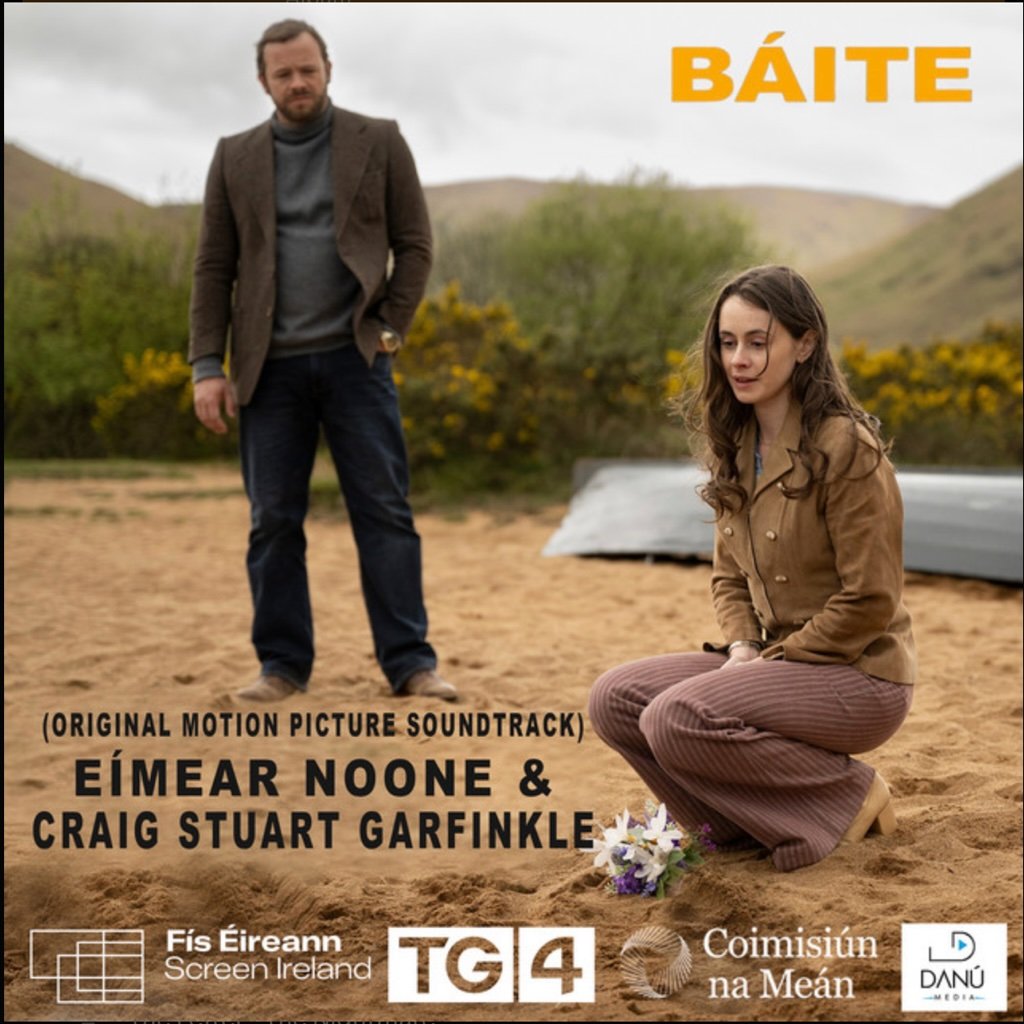
Baíte
The score for Báite (“The Drowned”) is one of the most haunting and emotionally authentic Irish film soundtracks in recent memory. Composed collaboratively by Eímear Noone and Craig Stuart Garfinkle, the music does far more than accompany the film — it becomes part of the landscape itself.
Set in 1970s rural Ireland, Báite is a mystery steeped in grief, memory, and buried secrets. The soundtrack understands this instinctively. Rather than overwhelming scenes with grand orchestral gestures, the score moves like weather across Connemara: restrained, melancholy, ancient, and deeply human. The music often feels as though it is rising from the lake itself.
What makes the soundtrack especially powerful is how distinctly Irish it sounds without falling into cliché. There are traces of traditional Irish melodic turns and modal harmonies woven subtly into the orchestral writing, but the score never becomes sentimental “tourist Ireland.” Instead, it evokes the emotional texture of rural Irish life — isolation, community, spirituality, silence, and history. Noone herself described wanting the score to carry “a skin on it that is distinctly Irish.”
The orchestration is exquisite throughout. Strings drift between tenderness and dread, low woodwinds create a constant undertow of tension, and sparse piano writing gives several cues an almost sacred stillness. The soundtrack understands that mystery is often more effective when whispered than shouted.
One of the score’s greatest achievements is atmosphere. The opening aerial shots of Connemara reportedly “nearly scored themselves,” according to Noone, and the music captures that windswept beauty perfectly. The landscape and score become inseparable — grey skies, water, stone walls, and lonely roads all seem to resonate musically.
There is also a striking emotional maturity to the writing. The score never manipulates the audience into feeling sadness; instead, it allows emotion to emerge gradually through texture and restraint. That patience gives the soundtrack unusual depth.
The collaborative chemistry between Noone and Garfinkle is evident throughout. Their backgrounds in film, orchestral music, and game scoring give the soundtrack both cinematic sweep and intimate detail. Certain cues feel almost timeless — suspended somewhere between folk memory and modern film noir.
It is no surprise that the soundtrack received the IFTA Award for Best Original Music in 2026. More importantly, though, the music lingers after the film ends. Like the best scores, Báite leaves behind not just melodies, but a feeling — of water, memory, and ghosts just beneath the surface.